 MITOLIFE
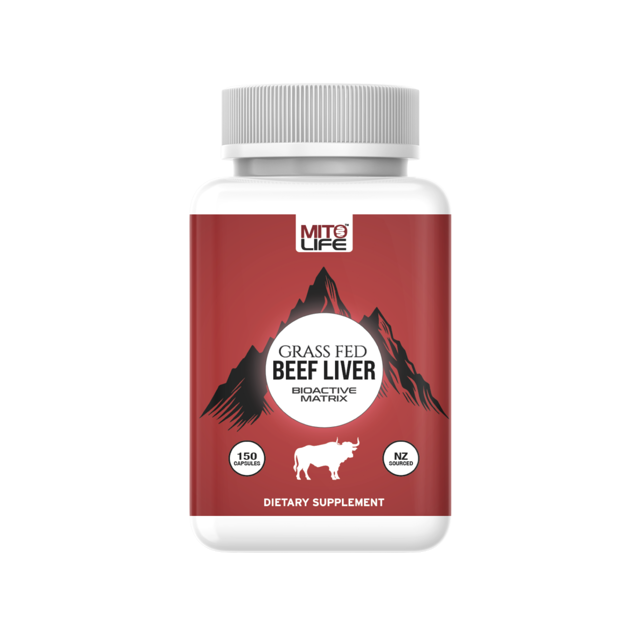
BEEF LIVER (100% NEW ZEALAND SOURCED)
USD 35.00
Description
Mitolife Beef Liver is sourced from grass-fed cattle farms in New Zealand. The liver is freeze dried (not desiccated) and non-defatted to preserve the heat-sensitive nutrients such as retinol and vitamin E, even unique peptides, and then put into capsules. If you were raised on a standard American diet, eating copious amounts of iron-fortified cereals and soy products, this is an excellent way to regain your strength and vitality. The standard American diet and westernized diets can contain a number of nutrient depleting factors. Iron-fortified foods that contain reactive unbounded iron that wreak havoc on mitochondria. Mitochondria require protein-bound iron to be able to use it effectively. Grains and soy products that increase estrogen. And contaminants like mold toxins, all cause oxidative stress and deplete our nutrient stores. Over time we may begin to develop health conditions that arise from a lack of micronutrients. Grass-fed liver serves as a means of providing those lost nutrients, in their most bioavailable forms. Reducing and in some cases, reversing the damage done by a westernized-style diet. A rich source of potassium, folate, choline, CoQ10, B vitamins, retinol (vitamin A), selenium, copper, zinc, and more, grass-fed beef liver is truly a powerhouse of nutrients. It also contains vitamin D, vitamin K2 and betaine. Liver provides an abundance of key nutrients not commonly found in most diets. And it does so, in the most absorbable form too. This includes the complex of B-vitamins such as B1, B2, B3, B5, B6, B8, B9, B12, and choline. Liver also provides electron transporting molecules like vitamin K2, vitamin E, and CoQ10. All of which are crucial for optimal heart and brain health. Trace minerals such as selenium support the production of our own source of antioxidants. Molybdenum helps with breaking down toxins in the liver. Iron in a bioavailable form found in the liver supports oxygenation of tissues. The fat soluble vitamins found in liver support skin health, act as antimicrobials, and combat pro-inflammatory signaling. Liver is also the richest source of the active form of vitamin A – retinol. There are even yet to be determined compounds found in liver that contribute to great health. Including a number of unique peptides, and molecules like betaine, that in turn support our liver. Here is a breakdown of the overlooked effects B vitamins found in grass-fed beef liver can have: Vitamin B1: Thiamine allows us to convert carbohydrates into glucose, develop the myelin sheath surrounding our nerves, regulate hydrochloric acid production, and improve heart, brain and immune health. Vitamin B2: Riboflavin is one of the eight B vitamins and is responsible for cellular respiration (mitochondria), breaking down food components, absorbing nutrients and maintaining tissue. Vitamin B3: Niacin is used by the body to turn food into energy. It also supports the body in maintaining the health of the nervous system, the digestive system and the skin. Vitamin B5: Pantothenic acid is necessary for making blood cells, as well as for synthesizing coenzyme A — an important factor in fatty acid metabolism. Vitamin B6: Pyridoxine is an important player involved in brain development and keeping the nervous and immune systems healthy. It’s also an essential cofactor in producing dopamine. Vitamin B9: Folate (also called folic acid) plays an important role in the creation of oxygen-carrying red blood cells. A deficiency in this essential vitamin can lead to anemia (low red blood cell count). Pregnant women often get folic acid supplements prescribed to ensure proper red blood cell counts as the body makes more blood to support the growth of the baby and to reduce the risk of birth defects. Vitamin B12: Cobalamin plays an important role in red blood cell formation, cell metabolism, nerve function and the production of DNA, according to the Mayo Clinic. Vitamin B12 deficiency, if left untreated, can lead to anemia, fatigue, muscle weakness, intestinal problems, nerve damage and mood disturbances. High quality desiccated beef liver supports our connective tissue systems (skin, hair, gums, ligaments, tendons), energy metabolism, immune health and heart, brain and liver health. Additionally, because many of these vitamins and minerals are found in a complex with proteins naturally found in liver, they're more bioavailable and are able to skip a lot of the steps needed to metabolize these key nutrients as would otherwise occur with synthetic versions of the same compounds. For example, for the body to actually use cyanocobalamin (a synthetic form of vitamin B12), it needs to undergo a conversion process in the liver to form methylcobalamin (the active form of B12 in the body). Methylcobalamin is naturally found in liver. Finally, many of these nutrients with their protein complexes, have a specific affinity for certain cellular targets. Adenosylcobalamin, another form of vitamin B12 only found in liver, will be shuttled directly towards mitochondria for successful DNA repair and energy production. SUGGESTED USAGE: Take 6 or more capsules with a meal. Each capsule contains 500 mg of beef liver.
Get a discount on BEEF LIVER (100% NEW ZEALAND SOURCED)
You could save on MITOLIFE BEEF LIVER (100% NEW ZEALAND SOURCED) with a MITOLIFE promo code:
15% off
worked 9 months ago